
Deedwell · Record-keeping tools for landlords
Tax time, already done.
Every rent payment, every expense, every deductible mile, recorded once, in the order your tax return actually reads.
Built for the landlord with one to a few rentals. 108 pages, 8.5 × 11. $16.99 paperback, $8.99 printable. No app, no login. You write in it.

The whole point
Blank columns leave the hard part to you. This one shows where each dollar goes.
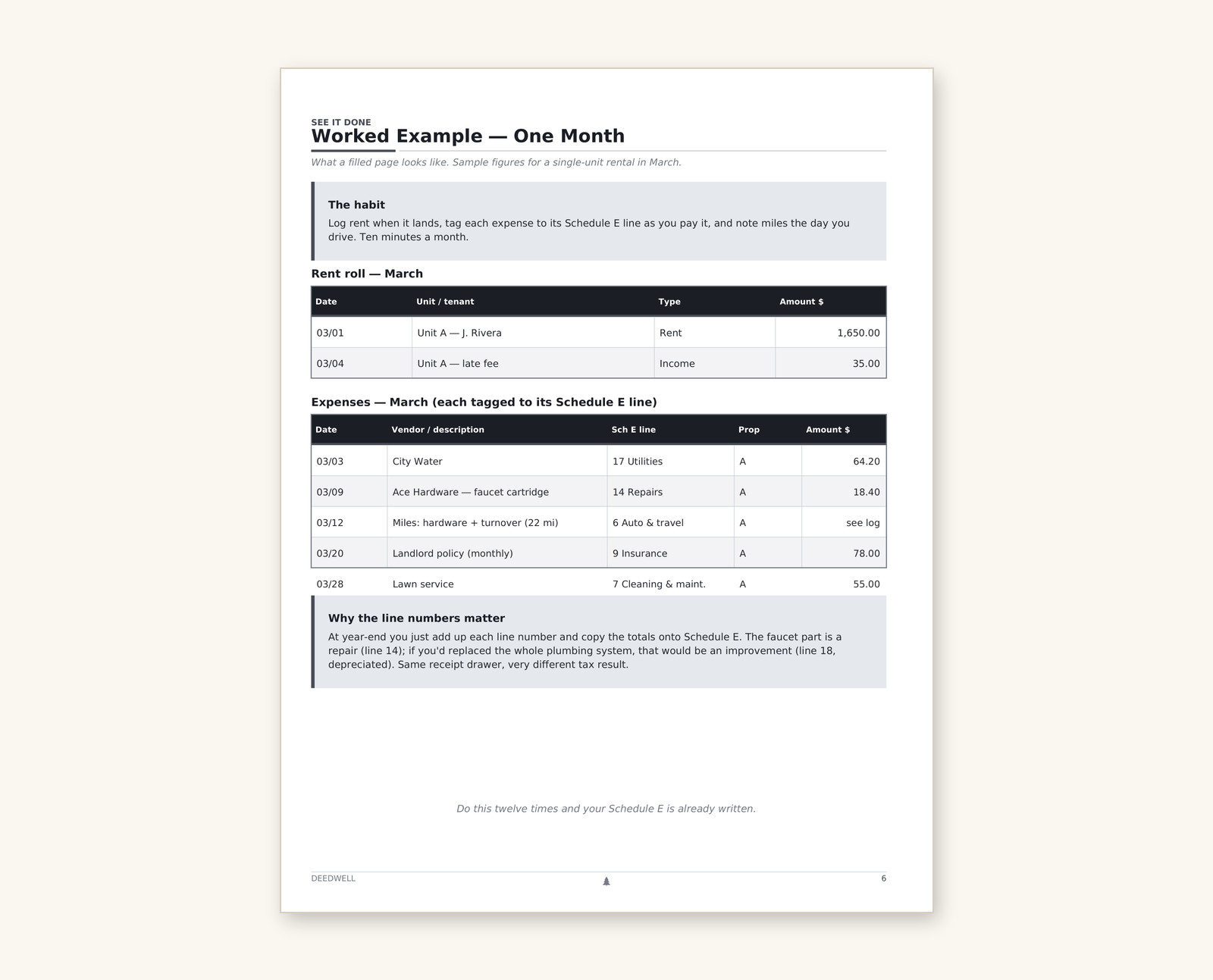
A plain-English Schedule E Map pairs every expense with its exact IRS line, so a year of receipts ends up somewhere the form can actually use. It is page 5, the first thing you see, before you have written anything.
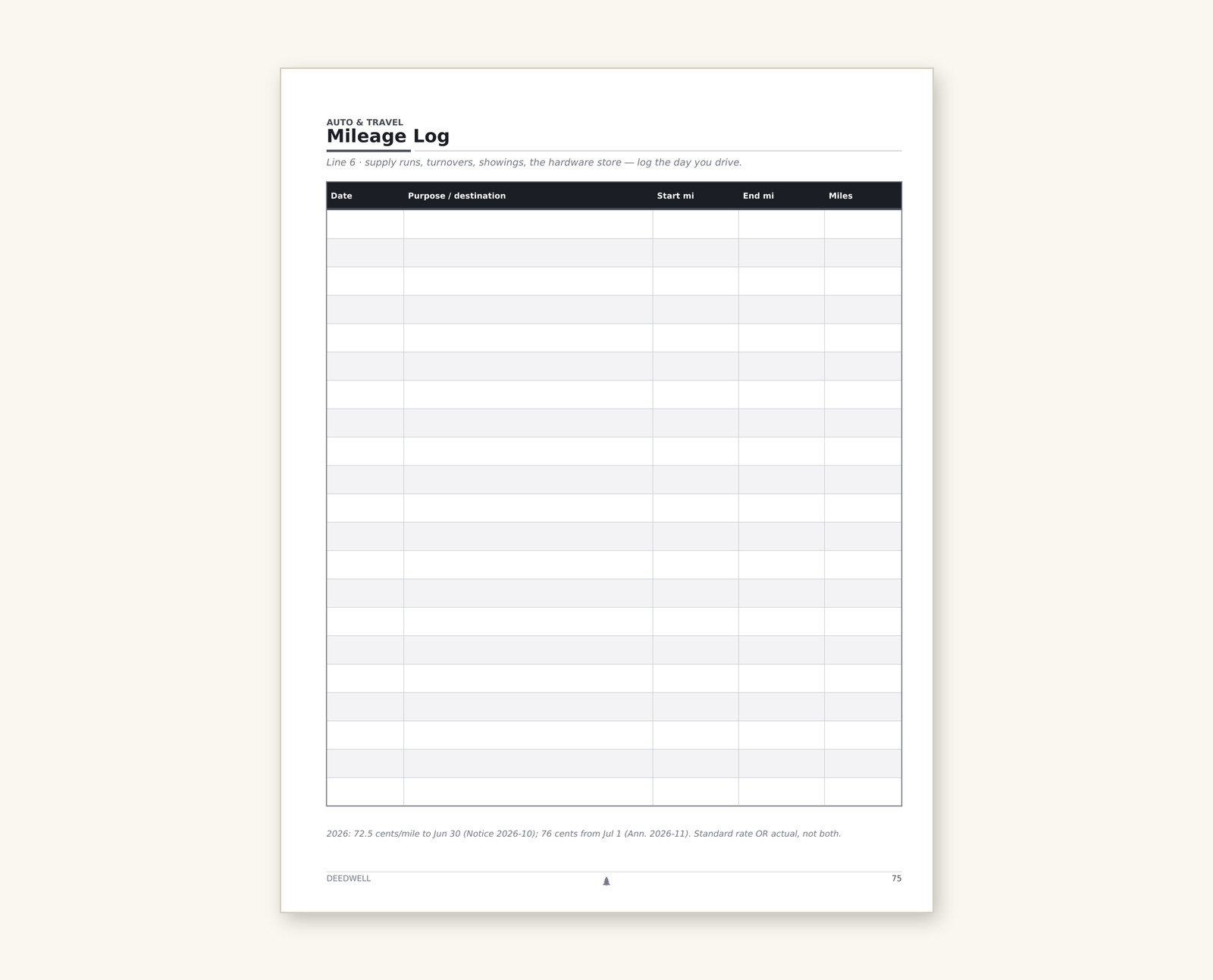
And because the 2026 mileage rate changed mid-year, the mileage log carries both rates, split by trip date, with columns for date, purpose, and odometer start and end. That is the substantiation an examiner asks for, and the reason most handwritten logs fail.
Printed and bound on Amazon, or the same 108 record pages as a PDF you print yourself. The free checklist is the same thinking on one page, and it stays free.

Made to be trusted
Built from the IRS’s own instructions, and dated so you can check.
Deedwell is a brand of Cedarstone Ventures LLC, a registered US company. We build from the IRS’s own Schedule E instructions, we name the source next to any figure we print, and we say plainly what a book does not do. Records you own and keep, not an app holding your data. Why Deedwell.
Sound familiar?
Renting the place out is easy. The money side is where it slips.
Receipts in three places
A folder, a glovebox and a banking app. None of them adds up to a number you can put on a form.
Leaked deductions
Mileage, supplies, repairs, depreciation. What goes untracked all year is the hardest money to find again in April.
Schedule E guesswork
Generic ledgers do not map to the form the IRS actually wants, so April becomes translation work.
Repairs, or improvement?
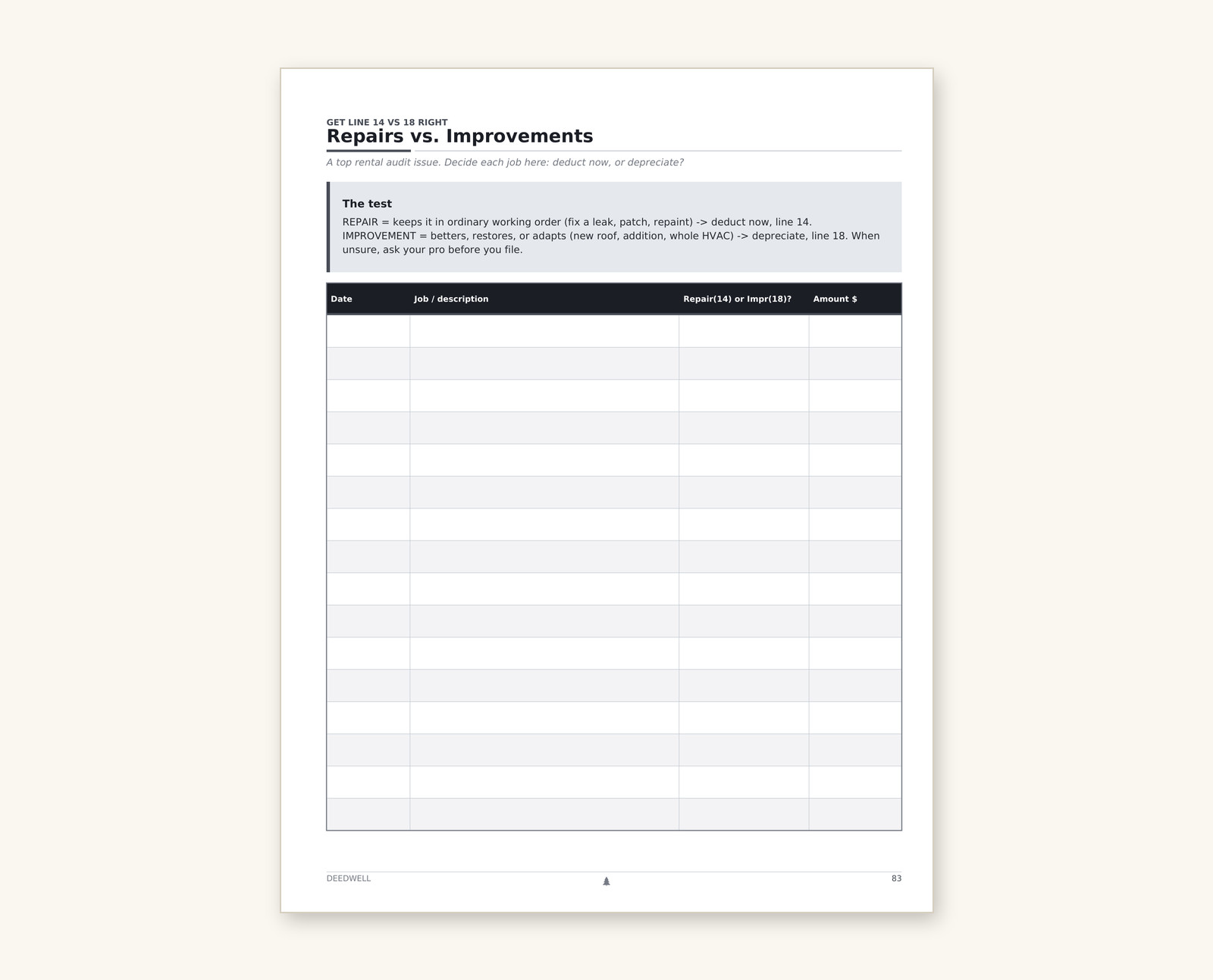
Deduct it now or depreciate it over 27.5 years. The call that most often goes wrong, and it is worth real money.
See it before you buy it
The inside, shown.
Every book on this shelf asks you to trust a cover. Here are the actual pages, at full size.
Inside the book
108 pages, in the order the year happens.
Nothing decorative. Every page exists because a landlord has to record something, and the tax return has to receive it.
- The Schedule E Map: every expense line, in plain English
- A worked example month, filled in
- Property profiles
- A cost-basis worksheet that feeds depreciation
- Tenant and lease logs
- Security-deposit tracking
- Twelve monthly rent rolls
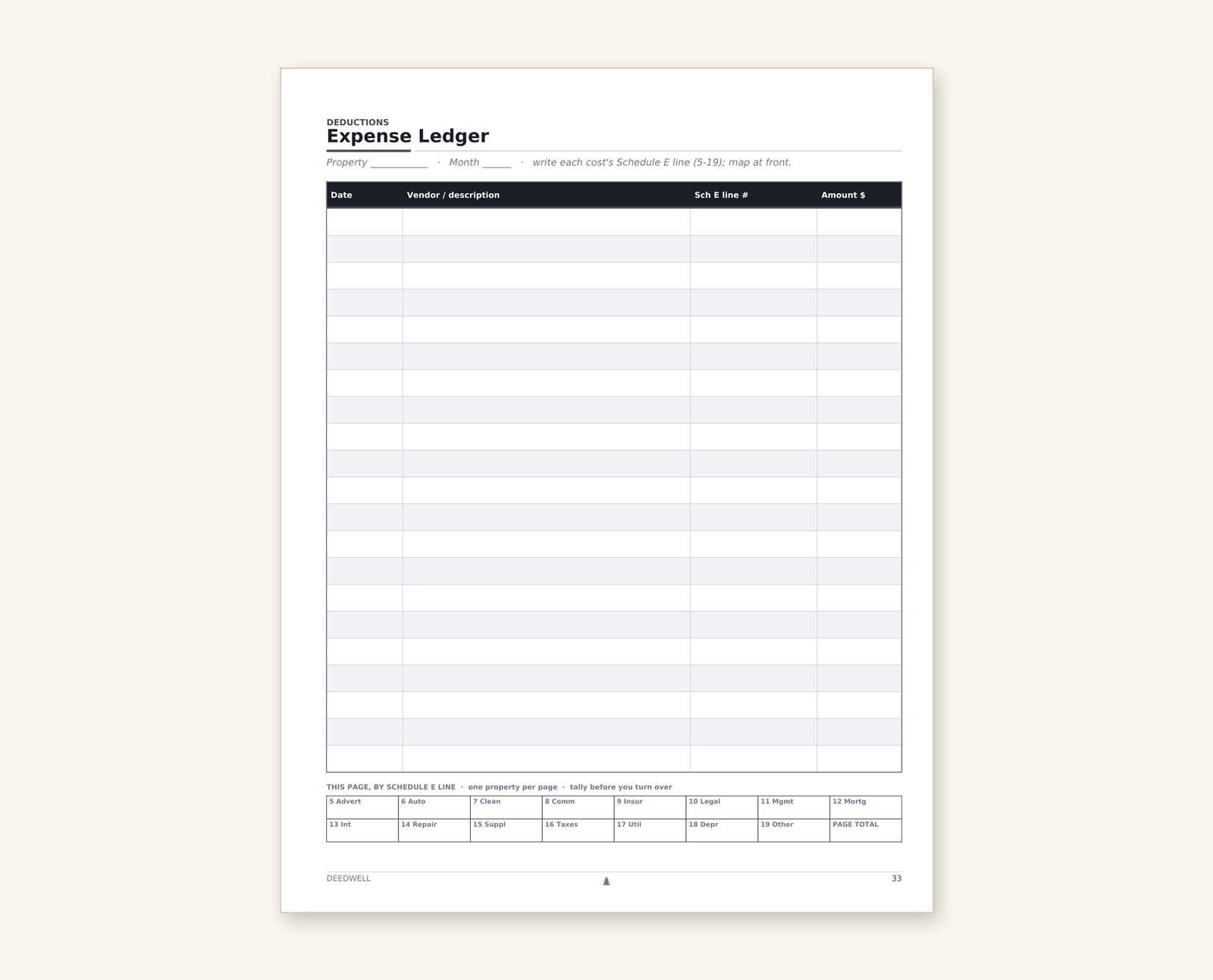
- A full-year expense ledger, tallied by Schedule E line
- The mileage log, built for 2026’s split rate
- Repairs vs. improvements
- Depreciation and assets
- Per-property year summaries
- The Annual Schedule E Summary
- A landlord deduction checklist
Please know what this is. It is a structured record book, organized around one tax form, for the landlord with one to a few rentals who wants the year to end tidily. It is not a blank ledger you can repurpose, and it is not software. If you want free-form columns, a plain ledger will serve you better and cost less.
Everything in one system
The Deedwell landlord kit.
Start free, add the record book when you are ready, and reach for the sale-day tools when it is time to sell. One system, in plain English, all built around Schedule E.
Rental Property Record Book
108 pages, built backwards from Schedule E. Every rent payment, expense and deductible mile, recorded once, in the order your return reads.
Deduction Checklist
The landlord deductions easiest to miss, each named next to the expense category that captures it. One page, no email.
Basis Reconstruction Checklist
Selling the rental? The exact records to gather so your adjusted basis is defensible and your gain is not overstated.
Basis & Recapture Kit
The full interactive tool for a rental sale: reconstruct multi-year basis, model depreciation recapture, hand your CPA a finished figure.
More tools for landlords are in the works.
Optional · nothing is gated
The numbers on your Schedule E move. One of them moved halfway through 2026.
The IRS standard mileage rate ran at 72.5¢ a mile through 30 June 2026, then 76¢ from 1 July, a split year that is easy to file wrong. When a figure moves, we will tell you what changed and which Schedule E line it touches.
Email me when a figure changesThe free checklist stays free either way. A few notes a year, and nothing else. Every one goes up openly at deedwell.co/updates with no email required.
When it’s time to sell
Selling a rental? Keep more of your profit.
When you sell, the IRS taxes back the depreciation on your building, even the years you never claimed it. Reconstruct the wrong basis and you can over-report your gain by thousands. This free checklist is the exact list of records to gather before your CPA meeting, so your basis is defensible and your gain is right, not overstated.
Four parts: original cost basis, an improvements ledger, depreciation history including the years you missed, and the adjusted-basis hand-off to your accountant. Cross-checked against the 2025 IRS editions. You gather; your CPA computes.
Free, and no email needed to read it. An educational organizer, not tax advice.

Gabriel, Office of the CEOQuestions? Write to info@cedarstonellc.com and we answer every one.